· 10 min read
How to Get More Customers to Your Website: Fix 3 Barriers
Got a website but no customers? The cause is one of three — being found, being trusted, being easy to act on. Find yours.
How many people visit your website each day? Most business owners can't answer — and that's exactly where customers slip away.
Getting more customers to your website isn't one job, it's three: people have to find you, trust you, and reach you easily. Most owners pour money into only the first one — ads. The other two get ignored, so the money goes out and the customers still don't come.
Picture this: you ordered a good-looking site, waited a month, and got zero orders. The easy conclusion is "websites don't work in Uzbekistan." But the site isn't the problem. It's a beautiful shop on a back street where nobody walks past.
The customers are there. Nearly 33 million people in Uzbekistan are online, 25 million on Telegram. The only question is how many of them ever reach your site. For most businesses, the answer is almost nobody.
Why your website has no customers: 3 reasons
The most common mistake is treating a website like an ad. A site isn't an ad — it's an address. An ad stops a passer-by; a site welcomes someone who already showed up. First you bring people to that address, then you turn them into customers.
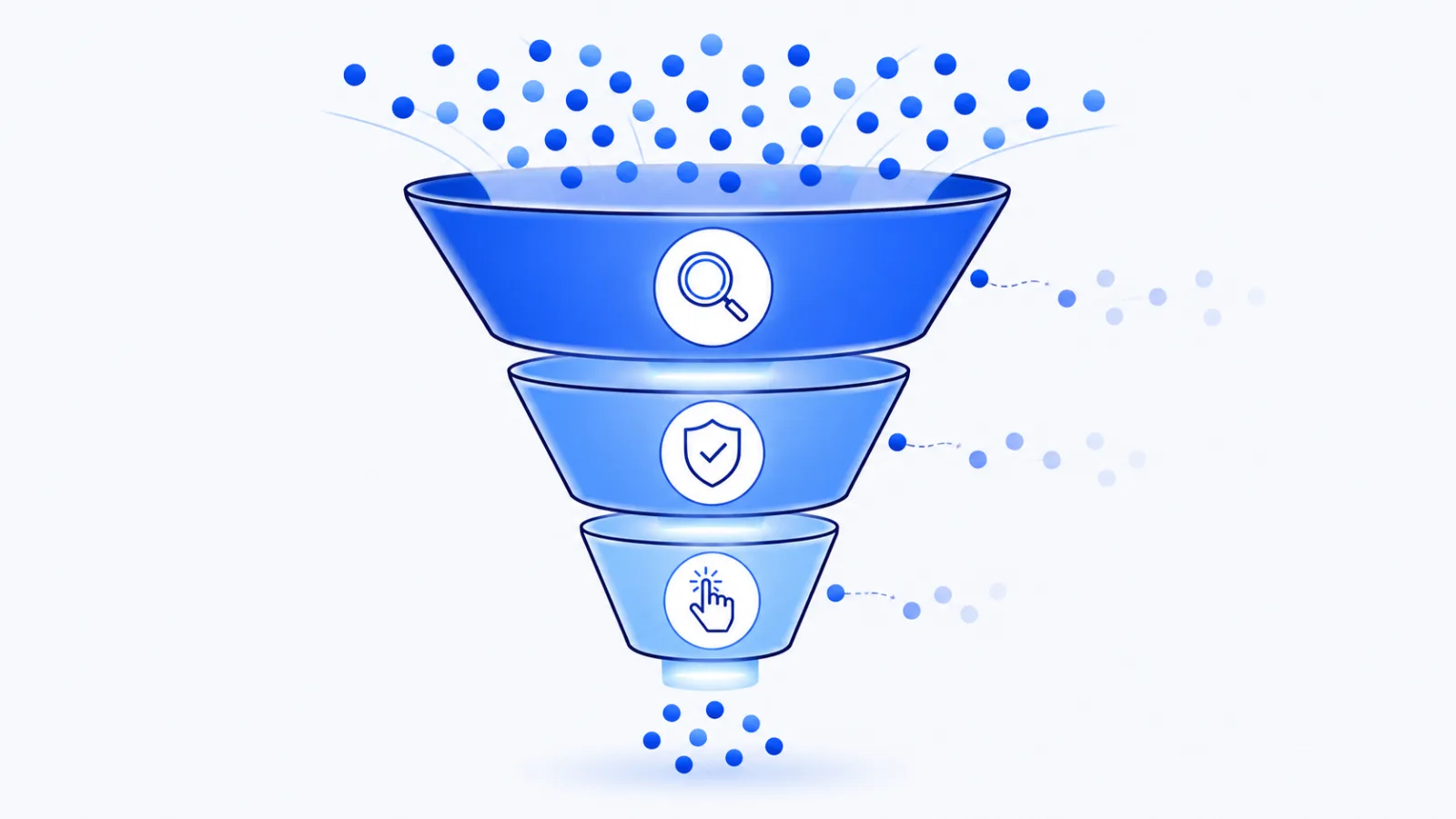
"More customers" is really three separate problems, and owners mix them up constantly:
- Found — can people find you at all?
- Trust — they found you, but why should they believe you?
- Action — they trust you, but was it easy to get in touch or order?
These come in order. If they can't find you, trust and action don't matter. If they find you but you don't earn trust, they just leave. And if everything's fine but contacting you is hard, you lose them on the last step.
That's where the big mistake starts. Most owners spend only on the first barrier — traffic: more ads, more ads. But the leak is usually in the third. You pay once for the site, then every month for ads, yet never fix the spot where customers leak out. You're paying twice for the same customer.
Simple example. A clothing shop spends on Instagram, people land on the site — but the price is nowhere to be found. The customer can't be bothered to message "how much?" and leaves. The problem isn't traffic: the ad worked, the site dropped the customer at the final step.
Barrier 1 — found: where does a customer find your site?
Three roads lead to a website. Once you know which one your customer takes, you know where to put your effort.
- Search — Google and Yandex. In Uzbekistan, Google takes about 75% of search and Yandex around 22%. Focus on Google, but one in five people is still on Yandex.
- Social — Telegram and Instagram. Your customer is there all day: the work group, the mahalla channel, shop announcements — all in Telegram.
- Direct — a link on a business card, a QR code, a friend's recommendation.
All three roads come down to one choice: free but slow (you rank in search yourself) or fast but paid (you run ads). Which one depends on your budget and how urgently you need customers. Let's look at both.
The free road: showing up in search with SEO
SEO means lifting your site higher in Google search — getting found without paying for each click. Write one good page, and it brings customers for months.
Here's a local secret few mention: for many Uzbek-language queries there's almost no competition. Search "wedding hall prices in Bukhara" or "air conditioner installation in Tashkent" — you'll barely find a solid, useful page in Uzbek. Whoever writes one well first takes that spot. Not every query, of course — competitive topics need time and patience.
"Near me" and "buy" searches are climbing fast right now, and a large share of local mobile searches turn into a real purchase within a day. Showing up first the moment someone types "air conditioner installation in Tashkent" is a customer ready to buy.
One more point: content in Uzbek brings noticeably more customers than Russian-only. Write in the language your customer thinks in.
The fastest free win is a Google Business Profile. If you run a shop, clinic, restaurant, or you're a tradesperson, fill in the address, hours, and photos completely. A complete profile gets several times more clicks than a half-filled one — and makes the phone ring.
Honest take: SEO is free but slow. You usually see results in 3–6 months. It's planting that keeps giving a harvest later.
The paid road: when do you need Google Ads?
If you can't wait six months, ads do the job. Once Google Ads is set up, traffic starts within 1–7 days.
And right now there's a big upside: ads in Uzbekistan are still cheap. A click on Google Ads runs roughly 1,000–6,000 so'm — that's 3–10 times cheaper than in Turkey or Russia. A small business can test it from around 4–10 million so'm a month. (Prices shift with the exchange rate and competition.)
Match the channel to the customer's mindset. For someone searching with "I need it now" intent — Google Ads. For someone who's just scrolling and not searching yet — Instagram or Telegram ads.
There's one trap: stop the ads and the flow of customers stops too. SEO, done once, keeps working on its own for a long time. So the best move is both together: win customers with ads today while you plant SEO in parallel.
Take a dental clinic that just opened. No reviews, no search rankings yet. The only way to get the phone ringing in week one is Google Ads for "dental implant in Tashkent." Ads bring customers; SEO gradually takes over later.
Barriers 2 and 3 — trust and action: don't lose the customer who came
Here's the bitter truth: you can win the traffic and lose the customer right at the door. For many businesses the real leak is here — people arrive but don't become customers.
Speed
A slow site is an empty shop. According to Google, if a page takes more than 3 seconds to load, more than half (53%) of mobile visitors leave before it opens. Every extra second cuts orders by up to 20%. Of those who hit a slow site, 79% never come back.
In Uzbekistan most people open your site on a phone, over mobile data. A heavy, slow site is money lost outright.
Example: a flower or cake shop in Tashkent has a beautiful site, but during the holidays — peak demand — it loads in 6 seconds on mobile. The hottest moment for orders becomes the biggest drop-off.
Trust
People don't trust a strange site easily. Trust is built from small things: real photos (not stock), an exact address and phone number, customer reviews, and — above all — a price shown openly. People keep asking "how much?" for one reason: the price is hidden. Answer the question before they ask it.
Action
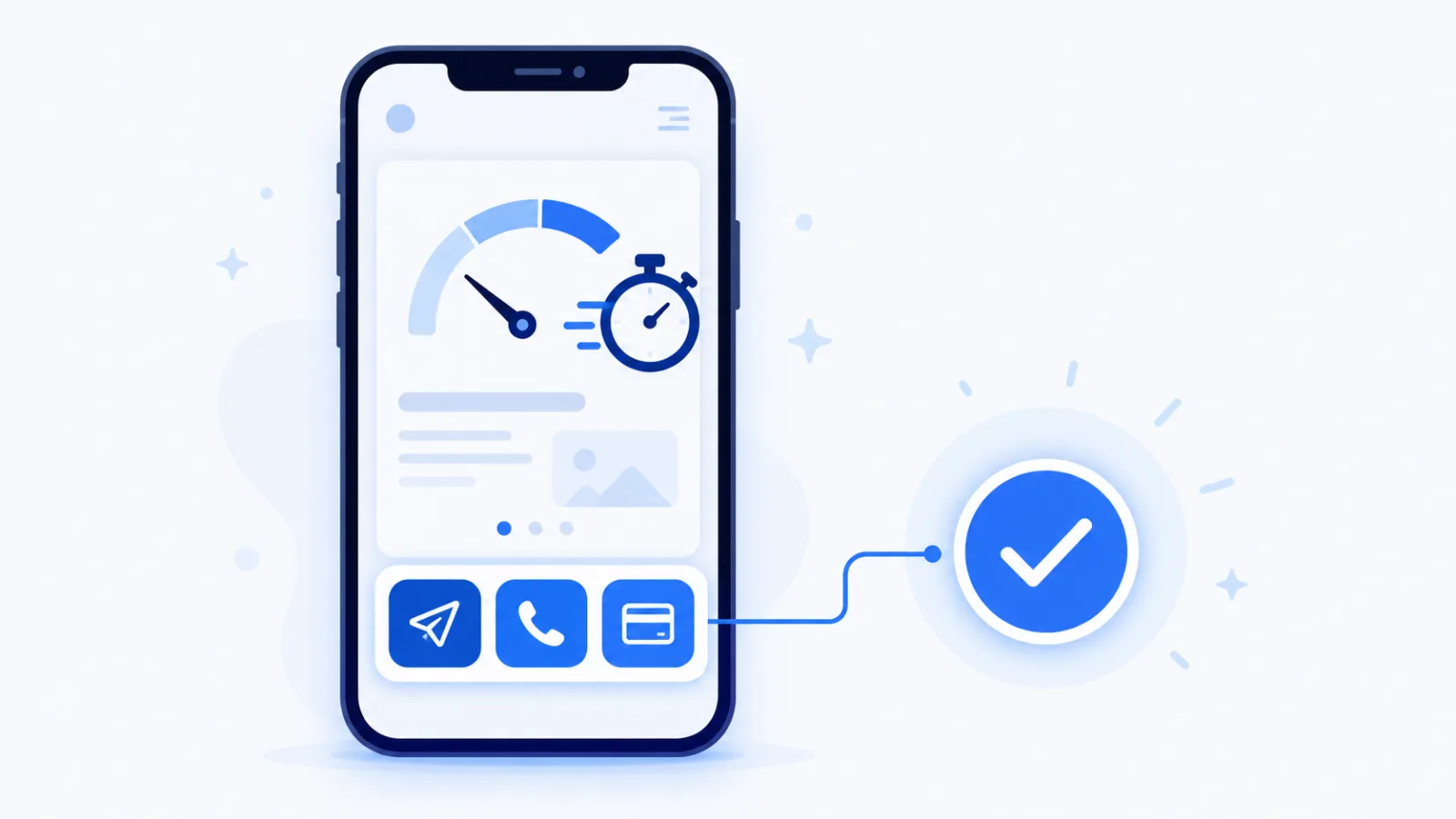
Get contact down to a single tap:
- a Telegram button that opens in one tap;
- a phone number that dials when tapped;
- payment via Payme or Click (Click has 12M+, Payme 8M+ users). Wiring that into the site is its own job — online payment integration handles it.
What happens otherwise? A real case: a food-delivery site looks great, but the order button is nowhere to be seen. The customer screenshots the menu, writes in the comments or DMs, and the order drowns in manual chaos.
These three — speed, trust, action — come first when we build a selling website. Looking good isn't enough; the site has to bring in leads.
One warning: fixing conversion doesn't create new traffic — it squeezes more customers out of what you already have. If nobody visits the site at all, start with the first barrier: getting found.
Who needs what: measure first
Which one should you start with? Don't guess. Most owners can't say which channel their last customer came from — that's flying blind.
Turn on measurement first. Yandex Metrica and Google Analytics are free: they show which page and which channel bring real leads. Even one question on your contact form — "how did you hear about us?" — is measurement. Measure first, then pin down which barrier is yours.
A guide by situation:
| Your situation | What to do | Speed | Rough cost |
|---|---|---|---|
| No traffic, small budget | Google Business Profile + Telegram + a fast site | Fast–medium | Low |
| Need customers this week | Google Ads or Instagram ads | 1–7 days | from ~4–10M so'm/month |
| Long-term free flow | SEO + useful content | 3–6 months | Mostly time |
| Traffic but no orders | Don't buy ads, fix conversion | Fast | Low |
Quick questions and answers
How much does it cost to get customers to a website? It depends on which barrier you're closing. A Google Business Profile is free. Google Ads for a small business starts from 4–10 million so'm a month. SEO and conversion work take more time, but unlike ads that eat money every month, their effect compounds.
When will I see results? Ads — 1–7 days. SEO — 3–6 months. Conversion fixes (speed, price, contact) act on your existing traffic almost immediately.
Can I do this myself? Part of it — yes. Filling out a Google Business Profile, showing prices, adding a Telegram button are all within reach. Site speed and serious SEO usually take experience.
SEO or ads — which is better? They're different tools. Ads bring customers today; SEO builds a free flow for tomorrow. If the budget allows, run both together.
Which barrier is yours?
When customers don't come, there's rarely a single reason. For one business the site can't be found, for another it's slow, for another it's hard to get in touch. Fix the right spot and the same budget brings more customers.
Want to know which barrier your site has? Message us on Telegram or leave a request for a free diagnosis — we'll look at your site together and tell you which barrier to close first. It's free and takes just 10 minutes.
Related articles

How to Tell If an Image Is AI-Generated: 7 Signs
People spot AI-generated faces just 48% of the time. Three free tools to verify any image in 30 seconds — from fake payment screenshots to deepfake ads.

App vs Website: Why Apps Feel Smoother Than Sites
53% of users leave if a site takes over 3 seconds to load. Apps live on your phone; sites reload from the network. See how Twitter and Starbucks fixed it.
Claude Fable 5: What It Is and Why the Hype?
What Claude Fable 5 actually does — a smart Telegram bot, reading receipts and contracts, customer support — and when it's overkill for a small business.